Tuesday, August 29, 2023

Sapiens - A brief history of mankind

Guess what? I finally finished reading 'Sapiens: A Brief History of Humankind.' I got this recommendation from another great book 'The Almanac of Naval Ravikant'. He was all about how 'Sapiens' spills the beans on our evolution and spills some secrets about why we humans do the things we do. Intrigued by what he said, I grabbed a copy as fast as I could, and I have to say, it's one of the best books I've ever read.

So, 'Sapiens' is like a time machine that takes you through different times in history. You practically feel like you're there, soaking in all the important moments that made us who we are. And those 'aha!' moments? They're like the lightbulb moments that make you go 'Wow!'

As I read, I jotted down notes to remember all the cool stuff I was learning. These notes pretty much sum up the main ideas from 'Sapiens' – these big concepts that totally change how we think about how we became us. 


The back cover was something that increased my curiosity further. Gossip was always thought of in a negative way, but I was pleasantly surprised to learn that our civilization actually thrived through gossip. Immense knowledge was passed down through generations thanks to gossip.


There are several mental models that have played crucial roles in shaping human history and society. Some of these mental models include:

Myths and Narratives: The ability to create and believe in shared myths and narratives allowed humans to cooperate flexibly in large groups. These stories served as a unifying force and enabled people to work together towards common goals.

Human civilization thrived through gossip

Agricultural Revolution: The shift from a nomadic, hunter-gatherer lifestyle to agriculture marked a significant mental model shift. The adoption of agriculture led to the establishment of settled societies, the concept of property ownership, and the development of hierarchies. 

Yuval makes a controversial statement that Agriculture is a scam. Only after reading further, you understand why he says that. 

Money: Money is a widely accepted shared belief system that facilitates complex trade and cooperation. It's a mental model that represents value, enabling individuals to exchange goods and services efficiently.

Empire: The idea of empires and imperial rule is a mental model that allowed for the organization and control of diverse cultures and territories under a single authority.

An interesting concept, "The Dunbar number", coined after anthropologist Robin Dunbar, is a cognitive limit to the number of stable social relationships a person can maintain. It's estimated to be around 150 individuals, suggesting that our brains are optimized for social interaction within this range.

Religion: Religious beliefs provided moral and ethical frameworks that guided human behavior, fostering cooperation and order within societies.

The Hammurabi Code, an ancient Babylonian legal code dating back to 1754 BCE, is mentioned in the book. This code is one of the earliest known examples of written laws and offers insights into the societal norms and governance structures of the time.

Nation: The concept of nations and nationalism introduced a mental model that united people based on shared culture, language, and identity, leading to the formation of modern nation-states.

Yuval introduced the concept of 'Nation' by explaining how a company like 'Peugeot' managed to thrive for decades using the made-up idea of a brand and nation.

Capitalism: The economic model of capitalism is built on the mental model of free markets and competition, shaping modern economies and trade systems.

Biological Manipulation: Advances in biological sciences have led to a mental model shift where humans now possess the ability to manipulate and engineer living organisms, impacting medicine, agriculture, and more.

An intriguing concept in the book that I absolutely loved reading about is when he explains how Homo sapiens managed to outcompete other hominins like Neanderthals and Homo erectus. He delves into various theories of replacement, interbreeding, and different scenarios.

Imagined Communities: The notion of imagined communities, where people feel a sense of belonging to a larger group even if they've never met most of the members, has influenced the development of societies and identities.

Scientific Revolution: The mental model shift brought about by the scientific method and empirical observation transformed how humans understand the world and led to technological advancements.

These mental models highlight the power of shared beliefs, ideas, and frameworks in shaping human behavior, societies, and civilizations over time. Each model represents a significant shift in human cognition and cooperation, contributing to the complex tapestry of our history.

Timeline of History: This is so deeply etched in my brain I will never forget this.

  • The book starts with the timeline of history. 
  • 6 million years back was when human existence started. 
  • 2.5 million years back the first stone tools were used. 
  • 300 thousand years back fire was used. 
  • 70 thousand years back when the magic happened, the cognitive revolution started.
  • 12 thousand years back agricultural revolution started and then humans transitioned from foragers to farmers. Then came social structures, kingdoms, nations etc. 
  • 2000 years ago religion started. 
  • 500 years ago scientific revolution happened. 
  • 200 years back the Industrial Revolution started.


Finishing 'Sapiens' feels like I've been on this awesome adventure. It's like looking at our past and how we humans got here all over again.

Bonus Trivia: Did you know? The first named individual in recorded history was actually an accountant named Kushim, hailing from ancient Mesopotamia!

Tuesday, August 22, 2023

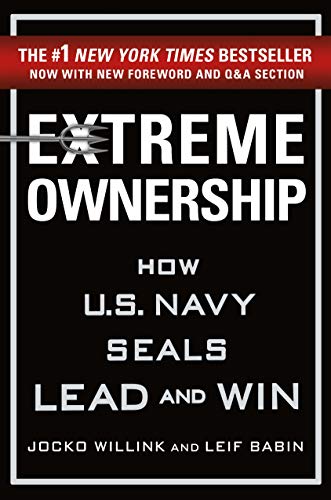
Extreme Ownership

At the beginning of 2022, I told myself I'd read more books. My goal was to finish 10 books by the end of the year. While I went through quite a bunch of books, now I'm using this blog to share the cool stuff I learned from them. It's like chatting about the neat things I found in these books.

One of the books, which I thoroughly enjoyed reading was "Extreme Ownership" by Jocko Willink and Lief Babin. The book takes us deep into the world of Navy SEALs' experiences, unraveling powerful leadership principles that transcend the battlefield and extend to the realms of business, decision-making, and personal development.


This post is a humble attempt to sum up what I've learned from the book. It's definitely worth going over again to remind myself of the ideas. Maybe this is also a bit for my own benefit, just so I can refresh these concepts.

I would like to tabulate the learning from each of the chapters. Each chapter follows a consistent template: it presents a brief war zone incident, highlights the underlying philosophy, and then applies that philosophy to a real-life business case.


"Extreme Ownership" isn't just a regular book; it's like a guide for leaders, business folks, and anyone who wants to get better in life. In the stories about Navy SEAL missions, Willink and Babin show how being a strong leader can be learned even when things get super tough. They draw a clear picture of how good leadership is made when you face really hard challenges.


Monday, August 21, 2023

I am back again!

 After a long break, I want to start blogging again. I want to tell you all that I got really busy with my regular life – family, job, moving to new places – and then COVID-19 came along. Because of all these things, I completely forgot about my blog.

When I first began my blog, I wanted it to be like a diary where I write about important things that happen in my life. I also wanted to share what I was thinking about different stuff. The idea was that in the future, I could look back, remember those times, and see how I thought about things back then – whether I was being silly or smart. Unfortunately, I ended up missing almost ten years of my life in updates because I kept putting off writing. Now that I've realized this, I'm hoping to start posting regularly again.

In the past, I had some good friends who followed my blog and left comments that motivated me to keep writing. I'm pretty sure they've forgotten about my blog by now. But if they subscribed to my blog's updates, I'm hoping they might get notifications and come back to read again.

I want to thank you for the support you've given me in the past, and I'm really looking forward to sharing more stories and thoughts with all of you again as I restart my blogging journey.

Saturday, July 18, 2020

Great Place to Work


I sometimes wonder when I look at websites of various companies the way they showcase about their workplace by putting videos of some select few associate's testimonials, colorful photographs of smiling happy employees and unauditable facts, wondering if they all are real.
It so seems like people associated with those companies are living in utopia and not working there is actually supposed to make you feel deprived of happiness which you never had experienced.

With that, would like to ask few questions to all those who are reading this.
What makes a place great place to work?


Is it the culture of the company?
Is it the policies of the company?
The vision, mission of the company?
The quality of the people in the company?
The compensation structure of the company?
The brand value of the company, how it is perceived by others?

A lot of times I see companies go for external validation (GOD and the jury of the agency only know the reality) as they know if they look inwards they will never get the answer which they want. The more a company boasts about its external accreditation the more I doubt its veracity.

For me if a place is a great place to work, when there is some sense of belonging. Like the way we feel when we are at our homes. If someone says I don't have peace at home, then am sorry it is not the home I am meaning. Now thanks to wfh if someone is working in a bad company, even homes start losing its belonging. As you are constantly carrying the stress, which in pre-covid times was left at bay in office.

Now how does this belonging to company can come?
It comes with the people you are surrounded with, the people with who you spend your work time.
It comes if you feel your objectives are aligned with the company's objectives
It comes if the trust levels are high
It comes when company does what it says and says only what it really means.

Recently a friend and colleague of mine shared an anecdote on Linkedin. Its a story of Shivaji Maharaj how his soldiers went beyond lengths to achieve goals set by their leader and how Shivaji commands total dedication and trust.

A lot of people had reflected several thoughts on how it was achieved.
Basically it is about alignment of goals and empathy by the leader which builds a great team who are genuinely motivated and thus wherever they work even it is deepest of the mines or an oil rig far off in Antarctica makes it a great place to work.

Friday, July 20, 2018

Come back

After a long hiatus, posting in this blog. The last post I made was 2.5 yrs back.
By now a lot of my friends, readers would have deleted this link from there bookmarks.


Thursday, December 03, 2015

2015 - Retrospect chap1

As we inch towards the year 2016, I feel it's good to look back the year 2015 and ponder over the things I had done, so comes this post as the first chap. (This is also a good reason to pour some content on to the blog, which has been on hibernation mode for quite long :P) On other note, it also gives me an opportunity to share stories of what kept me engaged outside the blog.


This apart I had participated in a 5k race on 5th of July 2015, for which I have not clicked any pic.

The timings for each of the races are,
  • 10k - Feb'15 - 1Hr 27 min
  • 5k - Jul'15 - 21 min
  • 21k - Aug'15 - 2Hr 45min
  • 5k - Oct'15 - Not timed
  • 10k - Nov'15 - 55min
I am looking forward for more such races in 2016 :) and would like to do 10k in 45mins and half marathon in 2hrs.